


Travel, Tourism & Leisure
Discover Kazakhstan
Mountains, Lakes, Canyons, Steppe, Cities & Silk Road Heritage
From the Caspian to the Altai: a country the size of Western Europe, and the itinerary that makes sense of it.
Kazakhstan is one of Central Asia’s most rewarding destinations for travellers seeking a combination of dramatic landscapes, vibrant cities, nomadic traditions and Silk Road history. Its enormous territory stretches from the Caspian Sea to the Altai Mountains, offering everything from alpine lakes and snow- covered peaks to deserts, canyons and historic cities. For first-time visitors, Almaty makes an excellent starting point. The country’s largest city combines cosmopolitan energy with easy access to the Tian Shan mountains and some of southeastern Kazakhstan’s most spectacular natural attractions. Further south, Shymkent and Turkistan reveal another side of the country, where ancient trade routes, archaeological sites and Islamic architecture tell the story of Kazakhstan’s place along the Silk Road. Kazakhstan’s official tourism portal also highlights destinations such as Kolsai Lakes, Issyk Lake, Charyn Canyon and Altyn-Emel National Park among the country’s major experiences. DISCOVER KAZAKHSTAN A Journey Through Mountains,
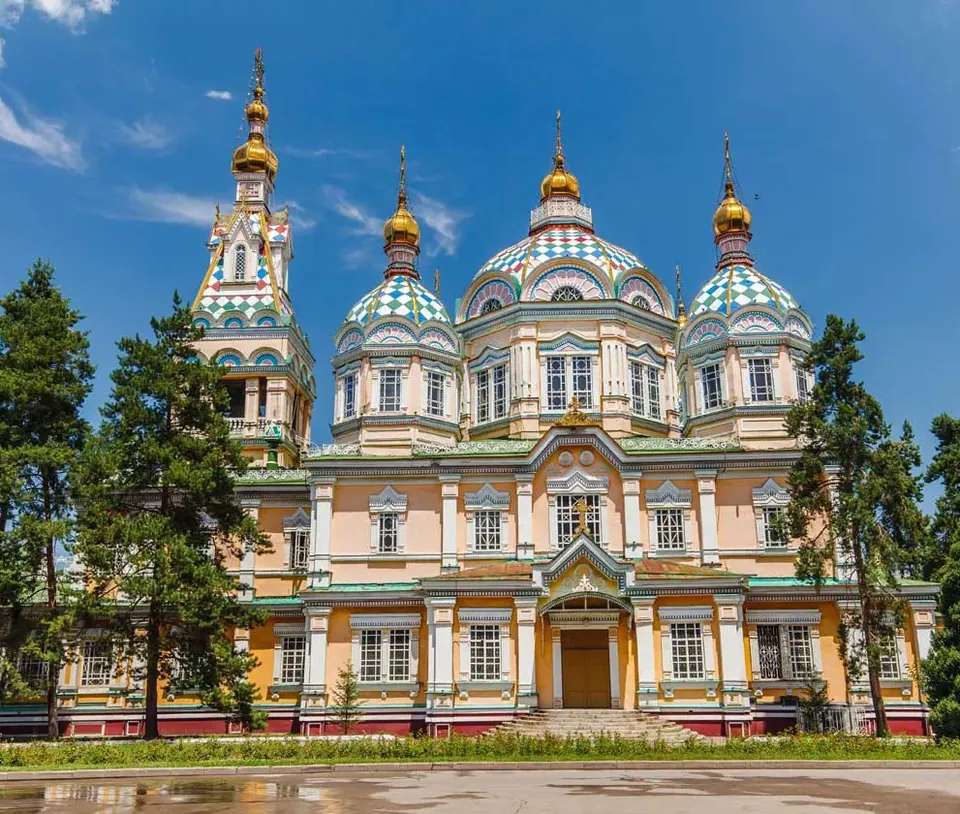
Almaty: The Gateway to Kazakhstan
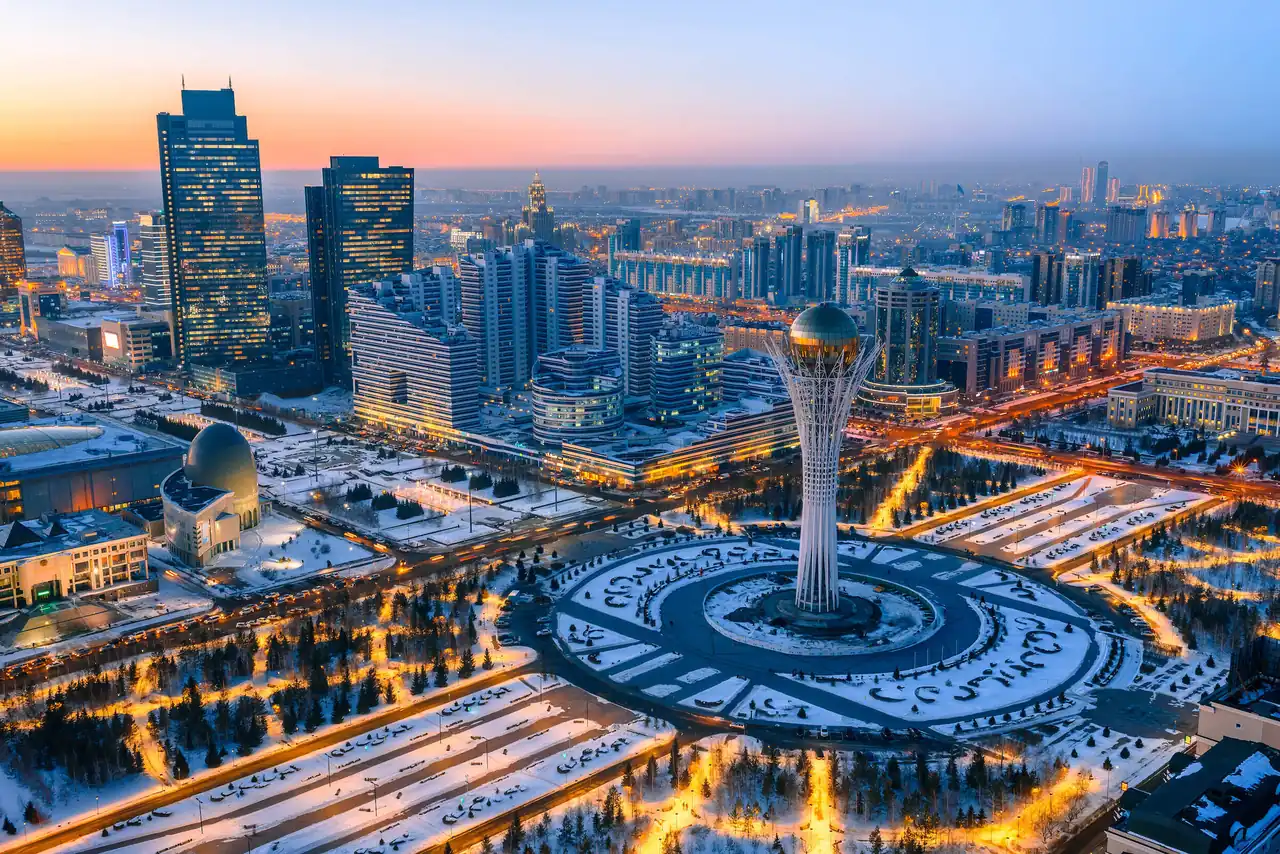
Almaty is often the most convenient introduction to Kazakhstan. Surrounded by the Trans-Ili Alatau mountains, the city combines leafy avenues, historic buildings, cafés, markets and a lively cultural scene. Begin in Panfilov Park, home to the striking Ascension Cathedral and monuments commemorating the Soviet-era history of the city. From here, travellers can explore the nearby Museum of Musical Instruments and continue towards the Green Bazaar, one of Almaty’s best places to experience local food and everyday life.
For panoramic views, Kok-Tobe Hill is an easy addition to a city itinerary. The cable car takes visitors above the city, where walking paths and viewpoints provide a broad perspective of Almaty and its mountain backdrop. It is particularly attractive around sunset. Another essential experience is Shymbulak Mountain Resort, accessible from the Medeu area. The resort operates throughout the year: winter brings skiing and snow activities, while warmer months are suited to mountain walks, photography and panoramic sightseeing. The resort rises to roughly 3,200 metres and has restaurants, viewing areas and accommodation options including mountain hotels and chalets.
“A first visit is best planned around one or two regions rather than a whole country — the distances here are continental.”
Stay in Almaty: From City Hotels to Mountain Retreats
Almaty offers one of Kazakhstan’s widest selections of accommodation, from international luxury hotels to boutique properties and mountain-side stays. Travellers wanting easy access to restaurants, shopping and sightseeing can choose a centrally located hotel, while those prioritising mountain views can stay closer to the foothills or Shymbulak. The city’s accommodation scene includes luxury properties such as The Ritz-Carlton, Almaty, while mountain-oriented accommodation around Shymbulak provides a more scenic retreat. Kazakhstan’s tourism portal notes that Almaty has a particularly strong concentration of high-end and boutique accommodation, making it suitable for both short city breaks and longer holidays.
Kazakhstan’s Spectacular Mountain Lakes
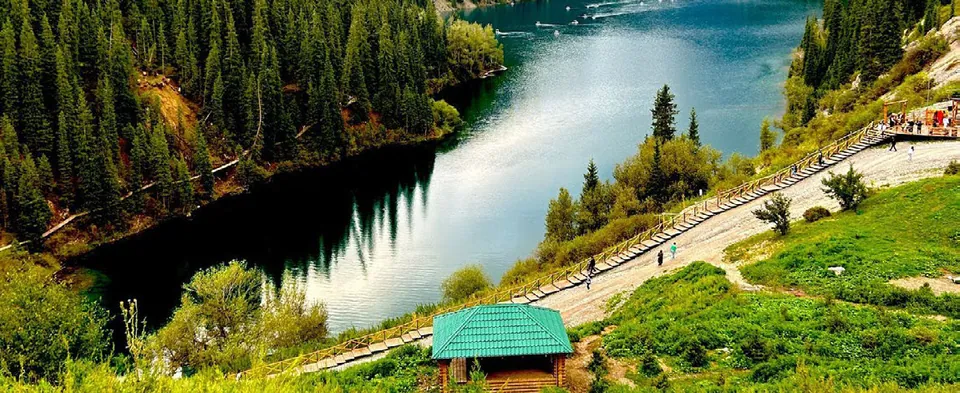
Beyond Almaty lies one of Kazakhstan’s greatest attractions: its mountain lakes. Issyk Lake, surrounded by the Trans-Ili Alatau, is suitable for a shorter excursion from the city, while Big Almaty Lake offers a dramatic high-altitude setting. For a more immersive experience, travellers can venture towards Kolsai Lakes National Park. The first Kolsai Lake is surrounded by conifer- covered mountains and clear water, while the second lake requires a longer hike. The third is considerably more demanding and is better suited to experienced trekkers with appropriate planning. Kolsai is officially promoted as one of the country’s standout natural destinations. Nearby Kaindy Lake offers one of Kazakhstan’s most distinctive landscapes. Its submerged spruce trunks rise through the turquoise-green water, creating an almost surreal scene. The lake can be combined with Kolsai on a multi- day excursion from Almaty. For visitors wishing to stay overnight rather than return to the city, accommodation around Kolsai and Kaindy is generally more rural, with guesthouses, homestays and small lodges providing a closer connection to the landscape.
Charyn Canyon: Kazakhstan’s Desert Drama
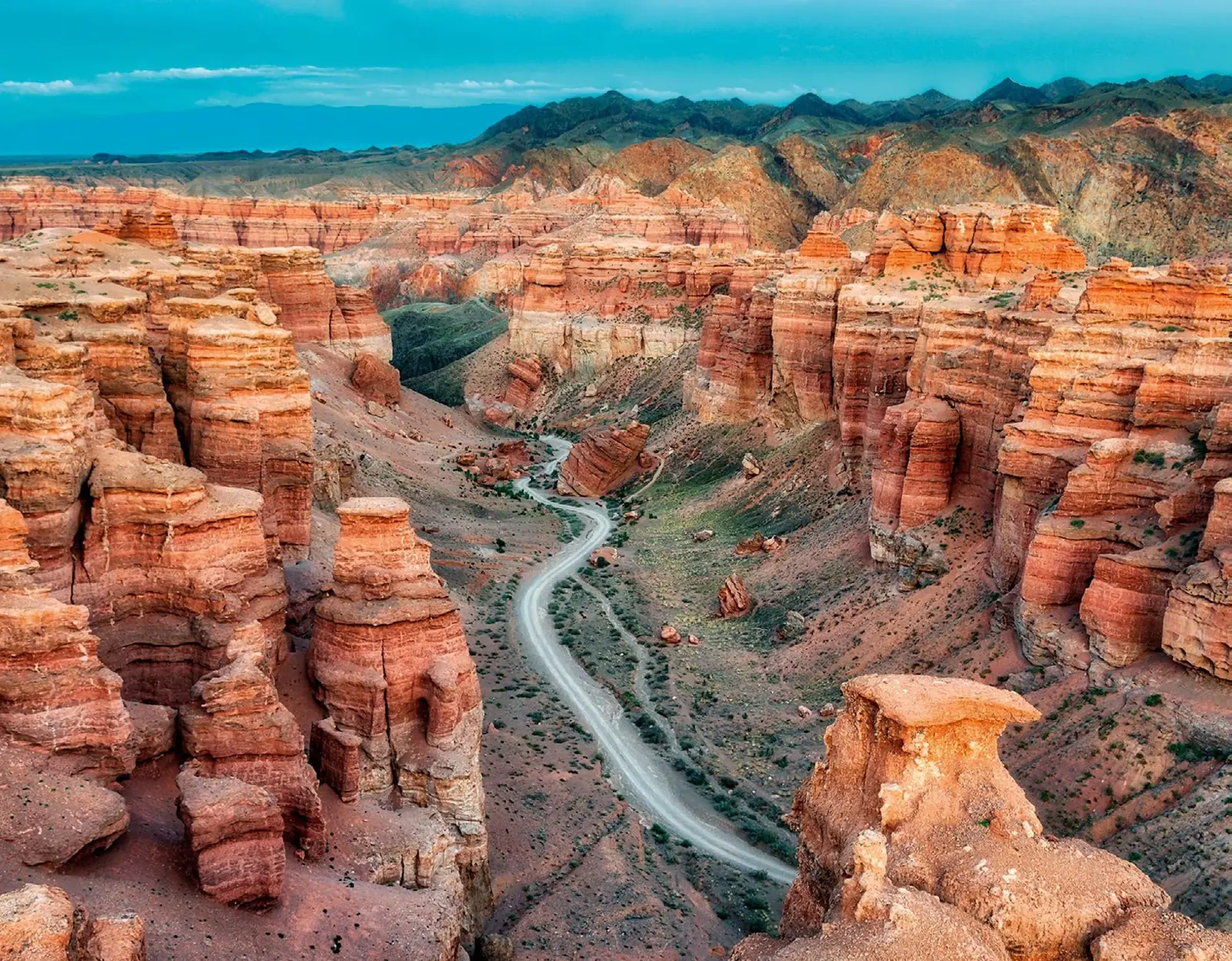
One of the country’s most memorable natural landmarks is Charyn Canyon, a vast geological formation east of Almaty. Often compared with the Grand Canyon, it has its own distinctive character, with red cliffs, narrow passages and dramatic rock formations. The most famous section is the Valley of Castles, where towering formations create a natural corridor through the canyon. Visitors can walk along the valley towards the Charyn River, making the destination particularly appealing to hikers and photographers. Kazakhstan’s tourism authorities describe Charyn as a landscape of red cliffs, river valleys and walking trails. Charyn is best incorporated into a wider southeastern Kazakhstan itinerary rather than treated as an isolated day trip. Combining it with Kolsai and Kaindy allows travellers to experience several contrasting landscapes in one journey. Because distances are considerable, an overnight stay near the mountain- lake region can make the experience considerably more relaxed.
The Silk Road Comes Alive in Shymkent & Turkistan
Southern Kazakhstan provides a completely different travel experience. Shymkent, close to the Uzbek border, is a useful base for exploring the region’s Silk Road heritage. The city itself offers traditional markets, local cuisine and cultural attractions, while its surrounding region opens the door to historic archaeological sites. One of the most important excursions is Otrar, an ancient Silk Road settlement in the Turkistan Region. Archaeological remains reveal the scale of a city that once played an important role in Central Asian commerce and culture. Today, visitors can walk among excavated walls, foundations and other remnants of the ancient settlement. Further along the route is Turkistan, one of Kazakhstan’s most important cultural and spiritual destinations. The city is best known for the magnificent Mausoleum of Khoja Ahmed Yasawi, a UNESCO World Heritage Site and one of the defining monuments of Kazakhstan’s historical landscape. Turkistan has developed into a modern cultural and pilgrimage centre while retaining its connection to the ancient Silk Road.
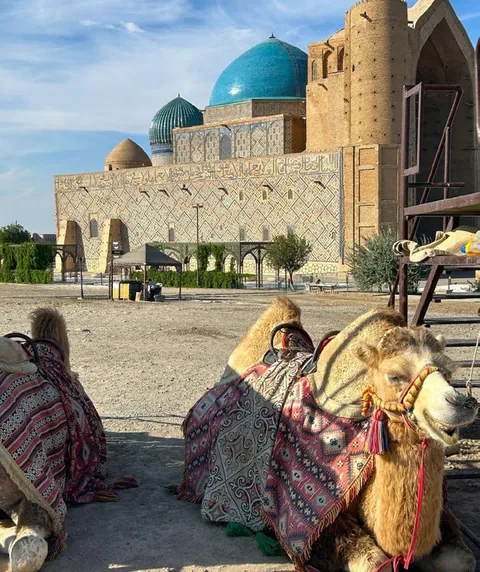
Where to Stay in Turkistan
Turkistan has developed a growing range of accommodation around its principal attractions. Hampton by Hilton Turkistan is among the conveniently located options, with the Mausoleum of Khoja Ahmed Yasawi roughly half a kilometre away. Karavansaray Turkistan provides accommodation within the modern tourism and entertainment complex, while Rixos Turkistan offers a more upscale option. Current hotel listings also show properties such as Hotel Khanaka, Yassy Hotel and EDEM Hotel close to the historic centre. For travellers who prefer a cultural atmosphere, staying in Turkistan for one or two nights allows time to explore the mausoleum, surrounding monuments and modern Karavansaray complex without rushing.
Experience Kazakhstan Through Its Cuisine
Food is an important part of discovering Kazakhstan. Traditional cuisine reflects the country’s nomadic heritage, with meat, dairy products and handmade breads playing a prominent role. Beshbarmak, made with boiled meat and noodles, is among the country’s best-known dishes. Kazy, a traditional horse-meat sausage, and kymyz, fermented mare’s milk, provide a glimpse into older nomadic food traditions. For a simpler introduction to local flavours, try baursak, small pieces of fried dough commonly served with meals and celebrations. In Almaty, the Green Bazaar is a useful place to explore dried fruits, nuts, cheeses, sweets, fresh produce and regional specialities.
When to Explore Kazakhstan
The best season depends on the type of holiday. Late spring and early autumn are particularly comfortable for city sightseeing, Silk Road excursions and canyon visits. Summer is well suited to mountain hiking and lake excursions, although temperatures can become high in southern and desert regions. Winter transforms destinations such as Shymbulak into major snow and skiing destinations. The Almaty region therefore works well as a year-round destination, with different experiences available in different seasons.
Planning a First Kazakhstan Holiday
A first visit is best planned around one or two geographic regions rather than attempting to cover the entire country. A well-paced southeastern itinerary can combine Almaty, Shymbulak, Issyk Lake, Charyn Canyon, Kolsai and Kaindy. Travellers with additional time can continue south towards Shymkent, Otrar and Turkistan. Kazakhstan’s greatest appeal lies in this contrast: a morning can begin in a modern city café and end among snow-covered mountains, while a later journey can lead through desert landscapes to a medieval Silk Road monument. For travellers looking beyond conventional Central Asian itineraries, Kazakhstan offers an expansive destination where nature, culture and history come together on an exceptional scale.
Continue exploring