

Fashion & Trends
Madina Tompiyeva
Reimagining Kazakh Identity Through Contemporary Fashion
The founder of Anima left economics in London and brand management in Milan to build an ethno-urban label in Almaty — and, with it, a visual language for a country still writing its own.
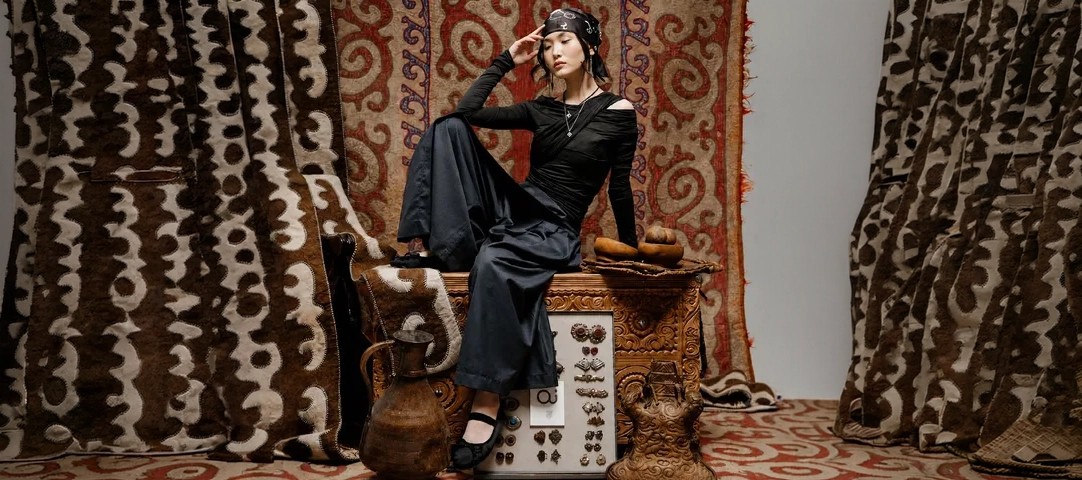
For Madina Tompiyeva, fashion is not simply about clothing. It is a way of exploring identity, freedom and the relationship between contemporary life and cultural memory. Born and raised in Almaty, the designer took an unconventional route into fashion, studying economics and mathematics, living abroad and working with international fashion businesses before eventually returning to Kazakhstan and creating her own label, Anima. Today, Anima is positioned as an ethno-urban, unisex fashion brand rooted in Kazakhstan. Its approach reflects a growing movement within the country’s creative industries, where designers are looking beyond traditional costume to reinterpret cultural heritage through contemporary design. Tompiyeva’s work illustrates how Kazakhstan’s fashion landscape is gradually developing a visual language that is both locally grounded and globally aware.

A Journey That Led Back to Creativity
Tompiyeva’s professional journey began far from the fashion studio. She studied at the Republican Physics and Mathematics School before pursuing education in China and later at University College London, where she studied economics and mathematics. Her international experience continued through professional work in Italy, where she was involved in brand management, fashion launches and Asian markets. The turning point came during the pandemic, when she returned to Kazakhstan from Milan. The unexpected pause encouraged her to reconsider her priorities and explore yoga, meditation, psychology and personal development. These experiences eventually became central to the philosophy of Anima. Rather than approaching fashion solely as a commercial venture, Tompiyeva began thinking about clothing as a physical and emotional experience. The concept was to create garments that felt comfortable, unrestricted and authentic—pieces that allowed the wearer to feel like themselves rather than conform to an imposed image.
The Birth of Anima
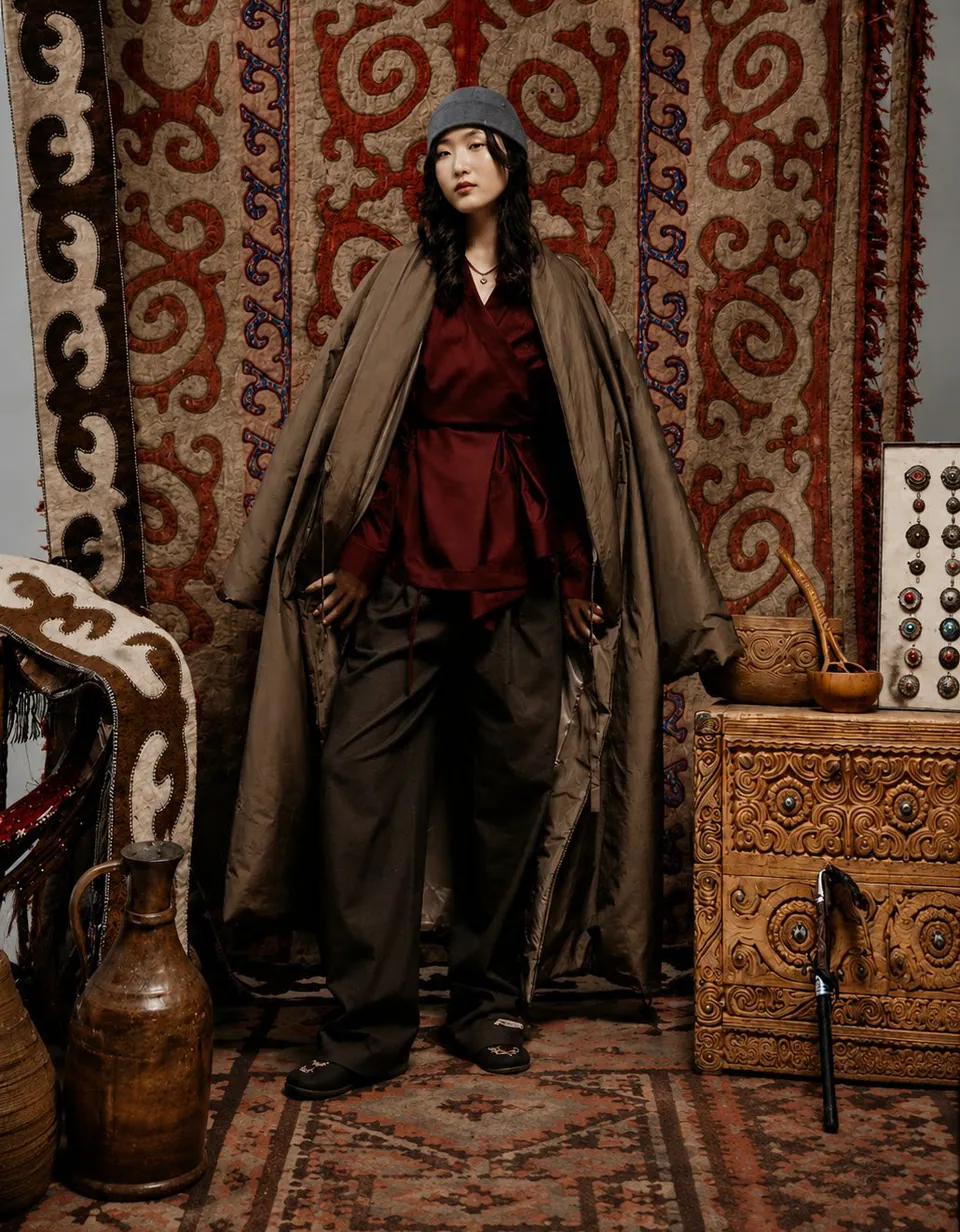
The origins of Anima were remarkably personal. Tompiyeva initially created a kimono for herself, designed around comfort and freedom of movement. It was intended to be easy to wear while sitting, lying down or meditating, without feeling restrictive. Interest from friends and acquaintances quickly followed. Requests eventually came through social media, and a small exhibition proved an unexpected commercial success. The early response encouraged Tompiyeva to develop the concept further, transforming what began as a personal experiment into a fashion label. The name Anima, meaning “soul,” captures the philosophy behind the label. The brand focuses on garments as an expression of an individual’s inner state rather than as instruments of social performance. This idea is reflected in its emphasis on natural materials, relaxed silhouettes and timeless pieces. Anima is also deliberately unisex. Its designs avoid rigid distinctions between men’s and women’s clothing, instead favouring oversized and adaptable forms. Cotton, linen and silk are among the natural fabrics used, with comfort and tactile quality playing an important role in the selection process.
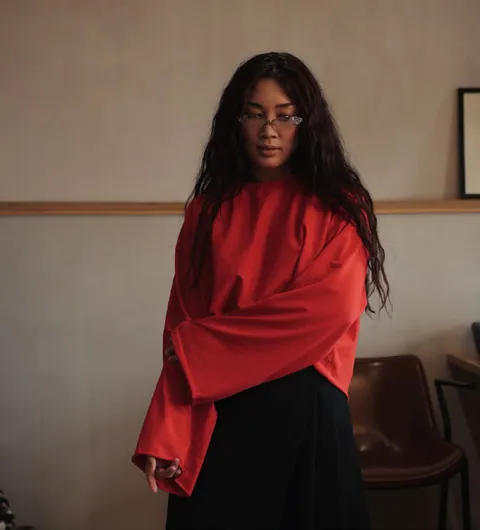
“Made in Kazakhstan represents more than a geographical label. It is connected to responsibility — to customers, employees and product quality.”
Where Tradition Meets the Urban Wardrobe
One of the most distinctive aspects of Tompiyeva’s work is the way she approaches cultural heritage. Rather than reproducing historical Kazakh clothing literally, Anima extracts ideas, emotions and archetypes from nomadic culture and translates them into modern silhouettes. The vastness of the steppe, freedom of movement, respect for nature and the traditions of nomadic life become sources of inspiration. These influences can appear through layered or flowing shapes, natural materials, subtle graphic references and relaxed construction. This distinction is important. Anima does not treat heritage as a costume or decorative theme. Instead, it asks how cultural memory can become part of everyday contemporary clothing. The result is a design language that can retain a connection with Kazakhstan while remaining relevant to an international urban audience.
Fashion as a Language of Identity
For Tompiyeva, clothing has the ability to communicate something beyond appearance. It can express personal values, cultural belonging and an individual’s understanding of where they come from. This perspective also reflects a broader shift among younger consumers in Kazakhstan.
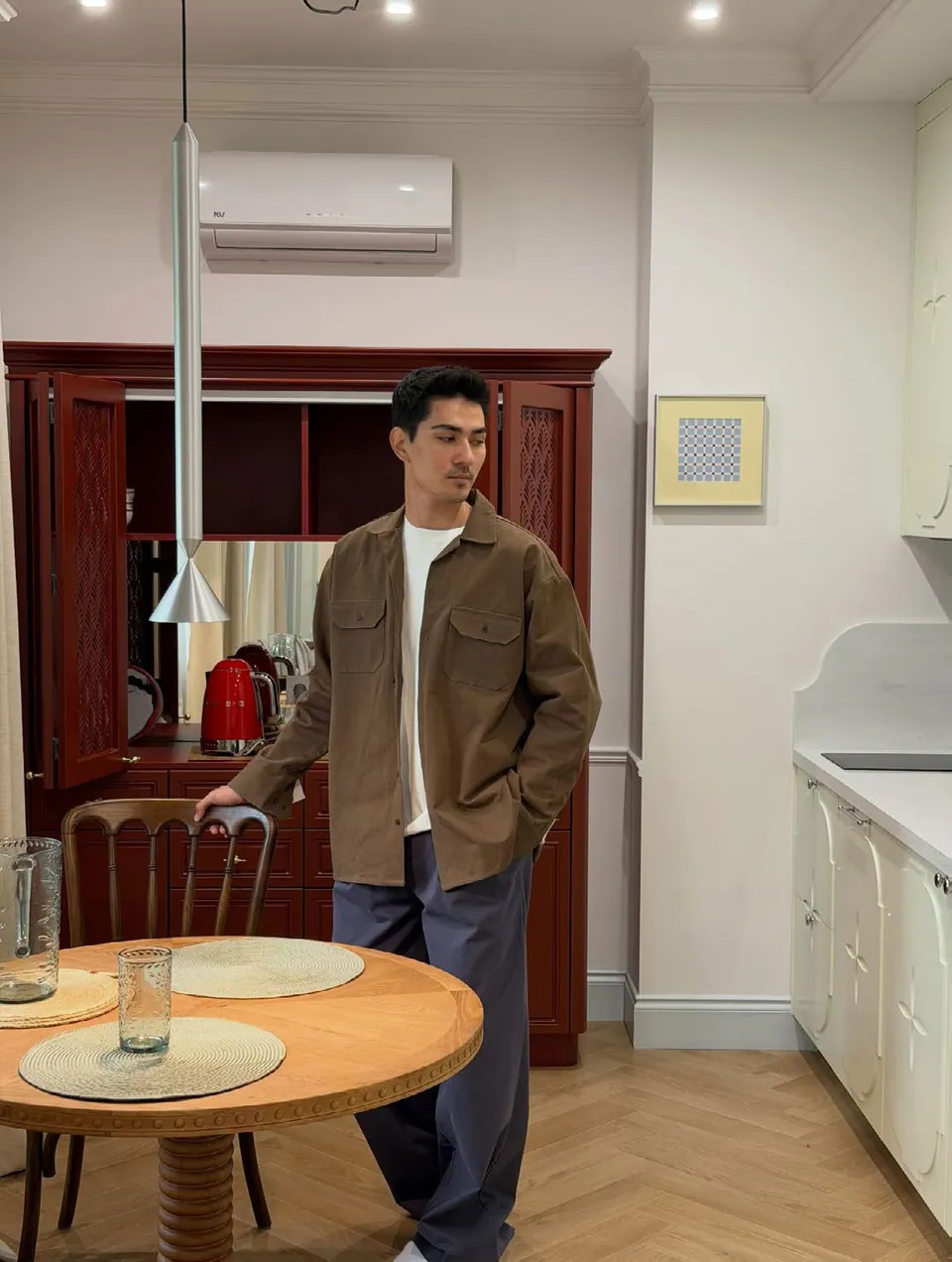
According to Tompiyeva, younger people are increasingly interested in understanding their cultural history and finding contemporary ways to express it. Local designers, musicians and artists are consequently experimenting with national cultural codes without necessarily reproducing traditional forms. The result is a more nuanced relationship between tradition and modernity. Instead of viewing the two as opposing forces, a new generation of creative professionals is treating them as complementary sources of inspiration.
Made in Almaty
Local production is another important part of Anima’s identity. The brand produces its garments in Almaty, allowing Tompiyeva to maintain greater control over quality while contributing to local employment and the development of production expertise. For the designer, “Made in Kazakhstan” represents more than a geographical label. It is connected to responsibility—to customers, employees, product quality and the wider development of the country’s fashion sector. At the same time, Tompiyeva recognises that international growth can bring new production challenges. As Anima expands, she has acknowledged that some production could potentially move abroad. The balance between local manufacturing and international scalability is therefore likely to become an important question for the brand’s future.
Building an Industry Beyond Individual Brands
Tompiyeva’s ambitions extend beyond Anima. She has spoken openly about the challenges facing Kazakhstan’s fashion industry, noting that the country has talented designers and emerging brands but still lacks some of the infrastructure, educational systems and institutional support found in more established fashion centres. Anima’s own development reflects both the opportunities and limitations of this environment. The brand remains relatively small and independent, growing gradually through returning customers and a philosophy centred on longevity rather than rapidly changing trends. The company’s LinkedIn profile describes Anima as a Kazakhstan-based unisex clothing brand with its own production and a focus on premium, timeless collections. It lists the company’s headquarters in Almaty and identifies the brand as founded in 2022.
“Instead of viewing tradition and modernity as opposing forces, a younger generation is treating them as a single continuous line.”
A Quiet New Direction for Kazakh Fashion
Tompiyeva’s work represents a different kind of fashion statement—one that does not depend on spectacle. The brand’s language is built around movement, material, comfort and the relationship between the individual and their surroundings. Her approach also demonstrates how Kazakhstan’s creative identity can evolve without abandoning its cultural foundations. The steppe, nomadic heritage and local memory are not treated as historical references frozen in time, but as living sources of inspiration capable of influencing contemporary design.
As Kazakhstan’s fashion industry continues to develop, designers such as Tompiyeva are helping establish a more confident creative vocabulary. Anima’s ambition is not simply to make Kazakh inspired clothing, but to demonstrate that a brand born in Kazakhstan can participate in a global fashion conversation while retaining its own character. For Madina Tompiyeva, that is ultimately the purpose of fashion: not merely to show the world what Kazakhstan looks like, but to explore what contemporary Kazakhstan feels like.
Continue exploring