



Government’s Special Initiatives
Kazakhstan’s Vision for Inclusive Global AI
From the Steppe to Shanghai: A Bid to Shape How the World Governs Artificial Intelligence
At the World Artificial Intelligence Conference, President Tokayev set out a case for AI as shared infrastructure — and for Kazakhstan as the bridge that carries it across Eurasia.
Kazakhstan is positioning itself as an emerging digital and technological hub in Central Asia, with artificial intelligence increasingly embedded in its national development agenda. The country’s participation in the World Artificial Intelligence Conference (WAIC) in Shanghai highlighted its ambition to play a larger role in shaping international AI cooperation, regulation and digital connectivity. President Kassym- Jomart Tokayev called for an inclusive, human-centred approach to artificial intelligence and stressed that every country should have the opportunity to develop its own digital capabilities. His proposals placed Kazakhstan at the centre of discussions on AI governance, digital infrastructure, education and cross-border technological cooperation.
Kazakhstan’s Vision for a More Inclusive
AI Era
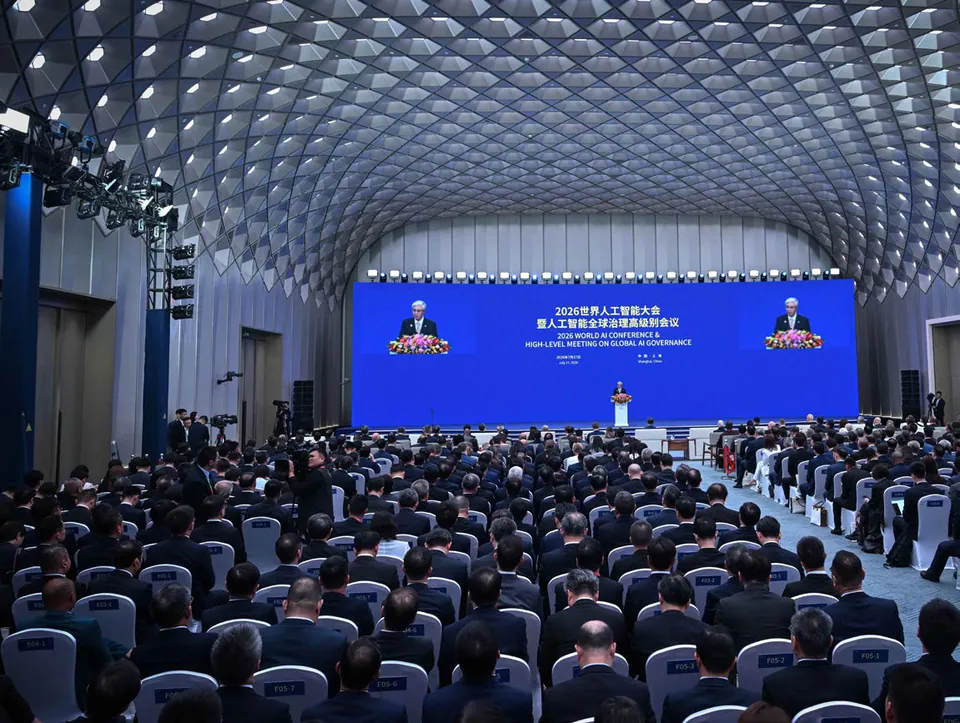
Addressing the opening of WAIC in Shanghai, President Kassym-Jomart Tokayev highlighted the accelerating transformation brought about by artificial intelligence. The conference, held under the theme “AI Partnership for a Brighter Future,” brought together political leaders, international organisations, technology experts and business representatives to discuss the future of artificial intelligence. Tokayev endorsed the principles of “AI for Good” and “AI for All”, arguing that technological progress should deliver benefits across economies and societies rather than deepen the divide between technologically advanced and developing nations. For Kazakhstan, this approach is closely linked to the country’s broader digital transformation strategy. The President stressed that international partnerships based on mutual respect and shared interests would be essential as AI becomes increasingly influential in economic development, trade, public services and global connectivity.
AI as the Infrastructure of Future Economies
Tokayev described artificial intelligence as a technology that is rapidly evolving into a full-scale infrastructure industry capable of influencing the future structure of economies and international trade. He argued that AI governance should extend across the entire technological ecosystem, including semiconductors, computing infrastructure, data centres, education, ethics and protection of human dignity. Such an approach reflects the growing recognition that AI development is no longer limited to software and technology companies, but is becoming interconnected with energy, telecommunications, manufacturing, finance and public administration. The President also linked AI governance with the broader geopolitical environment. At a time of international uncertainty and declining trust between major powers, he argued that artificial intelligence could be used not only for economic advancement but also for early-warning systems, preventive diplomacy, humanitarian action and peacebuilding.
“Artificial intelligence is not a national asset to be hoarded, but an infrastructure of future economies to be shared.”
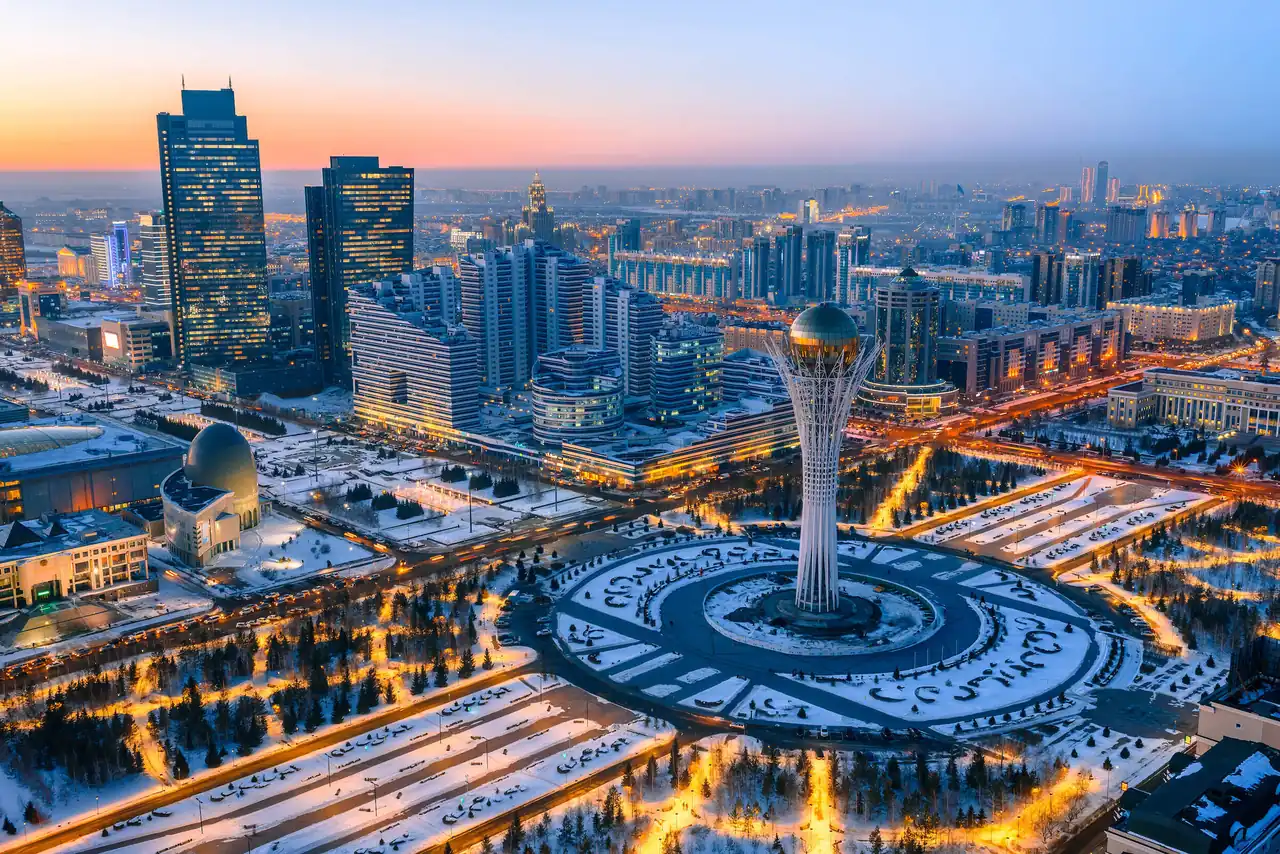
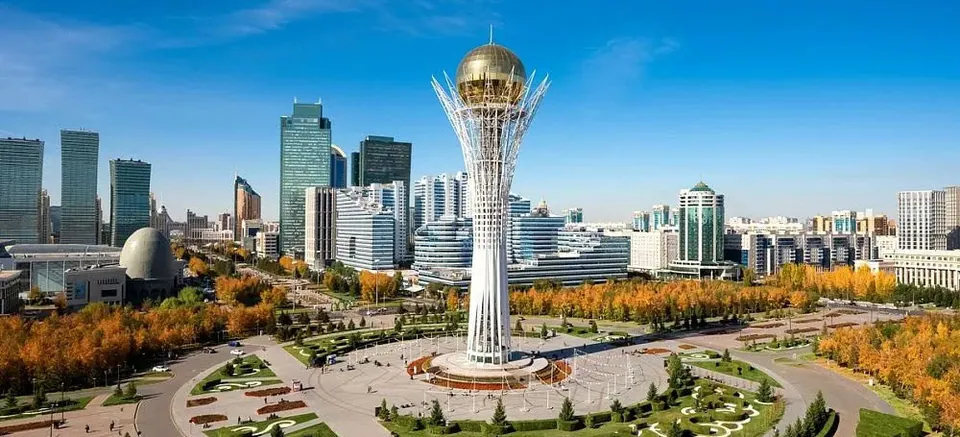
A central element of Kazakhstan’s presentation was the country’s potential role as a bridge between technology, markets and innovation ecosystems. Its geographical position, energy resources, critical minerals, transport corridors and expanding digital infrastructure provide a foundation for developing new technology-oriented industries. Kazakhstan is seeking to combine these advantages with policies aimed at accelerating digital transformation and attracting international technology companies and investors. The President highlighted the country’s efforts to strengthen its digital framework, including the development of the “Digital Kazakhstan – 2029” national strategy and legislation addressing artificial intelligence and digital governance. The country has also designated the current period as a national focus for artificial intelligence and digital development, underlining the strategic importance attached to the sector. Astana’s development as a smart city is another part of this transformation. Kazakhstan intends to expand advanced digital technologies beyond the capital and introduce them across other major cities.
Building Kazakhstan into a Digital Connectivity Hub
Alatau City & the Next Generation of Digital Infrastructure
Particular attention was given to the strategic development of Alatau City, which Kazakhstan envisions as a fully integrated digital city and a major technology and investment destination in Central Asia. The project is intended to create an environment capable of attracting global technology companies, investors and innovators, with China identified as an important potential partner. The initiative reflects Kazakhstan’s broader strategy of combining digital infrastructure with investment, innovation and international connectivity. The emphasis on digital cities also demonstrates how Kazakhstan views AI as part of a wider transformation of urban development. Smart infrastructure, digital public services, data-driven planning and connected systems could increasingly become components of the country’s urban growth strategy.
A New Platform for Global AI Governance
One of the significant developments surrounding the conference was the establishment of the World Artificial Intelligence Cooperation Organization. Kazakhstan was among the founding member states and welcomed the creation of the organisation as a potential pillar of international AI governance. Tokayev expressed Kazakhstan’s readiness to host the organisation’s inaugural meeting in Astana and proposed establishing a regional office for Central Asia in the Kazakh capital. For Kazakhstan, participation in such an institution offers an opportunity to contribute to international discussions on AI standards, safety, ethics and regulation while strengthening its profile as a regional technology hub.
Strengthening Kazakhstan-China Digital Cooperation
Digital cooperation with China emerged as another major component of Kazakhstan’s agenda in Shanghai. Tokayev proposed the Kazakhstan-China Digital Bridge Initiative, designed to accelerate digital commerce and provide a practical model for connecting digital economies across the Belt and Road framework. The proposal reflects the broader expansion of Kazakhstan-China cooperation in technology, trade, transport, energy and investment. The two countries have also discussed expanding cooperation in cross-border e-commerce, transport, energy, minerals and other sectors. This wider economic relationship provides an important backdrop to Kazakhstan’s push for deeper technological cooperation with China.
AI Across Key Economic Sectors
Kazakhstan is seeking to move beyond experimental AI applications and promote large-scale adoption across the real economy. Tokayev called for faster and safer deployment of AI in manufacturing, mining, energy, agriculture, healthcare and water management. For a resource-rich economy such as Kazakhstan, the integration of AI into these sectors could improve productivity, resource management, industrial monitoring and decision-making. The emphasis on practical applications also supports Kazakhstan’s ambition to become a regional technology and investment centre rather than simply a consumer of imported digital technologies.

Common Standards and Stronger Digital Safeguards
As AI systems become more widely deployed, Kazakhstan is advocating greater compatibility between national regulatory approaches. Tokayev called for common standards for testing and certifying AI systems, alongside safeguards against malicious applications. Cyber threats, deepfakes and digital fraud were identified as emerging challenges requiring coordinated international responses. The emphasis on common standards reflects one of the central challenges facing the global AI sector: technologies can operate across borders, while regulations remain largely national. Kazakhstan’s proposal seeks greater coordination between countries to create a more predictable and secure environment for AI development.
Tokayev also stressed that the future of AI will depend heavily on human talent. He called for younger generations to develop not only digital skills but also critical thinking, scientific curiosity and ethical responsibility. Kazakhstan proposed creating an international network of AI schools, centres of excellence and academic partnerships under the new global cooperation framework. The proposal complements the country’s efforts to expand its domestic AI capabilities. By strengthening education, research and international academic collaboration, Kazakhstan aims to develop a workforce capable of participating in the next generation of technological innovation.
Investing in Talent & AI Education
From Regional Hub to Global AI Participant
Kazakhstan’s participation in the World Artificial Intelligence Conference represents a broader effort to establish itself as an active participant in global technology discussions. Rather than viewing AI solely as an economic opportunity, the country is presenting it as a field requiring international coordination, responsible governance and wider access. Its proposals combine national priorities—including digital infrastructure, smart cities, education and economic diversification— with international initiatives covering AI standards, digital trade and global governance. The country’s planned role in hosting the Asia-Pacific Digital Solutions Centre for Sustainable Development in Almaty under the UN Economic and Social Commission for Asia and the Pacific further strengthens this positioning.
A New Chapter in Kazakhstan’s Digital Ambitions
Kazakhstan’s message at the Shanghai conference was ultimately centred on participation: countries should not be left behind as artificial intelligence reshapes the global economy. The country is seeking to build the infrastructure, regulatory framework, talent base and international partnerships required to participate in this transformation. Its cooperation with China, involvement in the World Artificial Intelligence Cooperation Organization and plans for digital development in Astana, Alatau City and Almaty indicate an increasingly ambitious national technology agenda. As AI becomes more deeply integrated into industry, public administration, trade and everyday life, Kazakhstan is positioning itself to serve as a link between Central Asia and the wider global digital economy. Its Shanghai proposals demonstrate an ambition not simply to adopt AI, but to contribute to the rules, infrastructure and partnerships that will shape its future.
Continue exploring