


Kazakhstan Builds Central Asia’s Largest AI Model for Turkic Speech Recognition
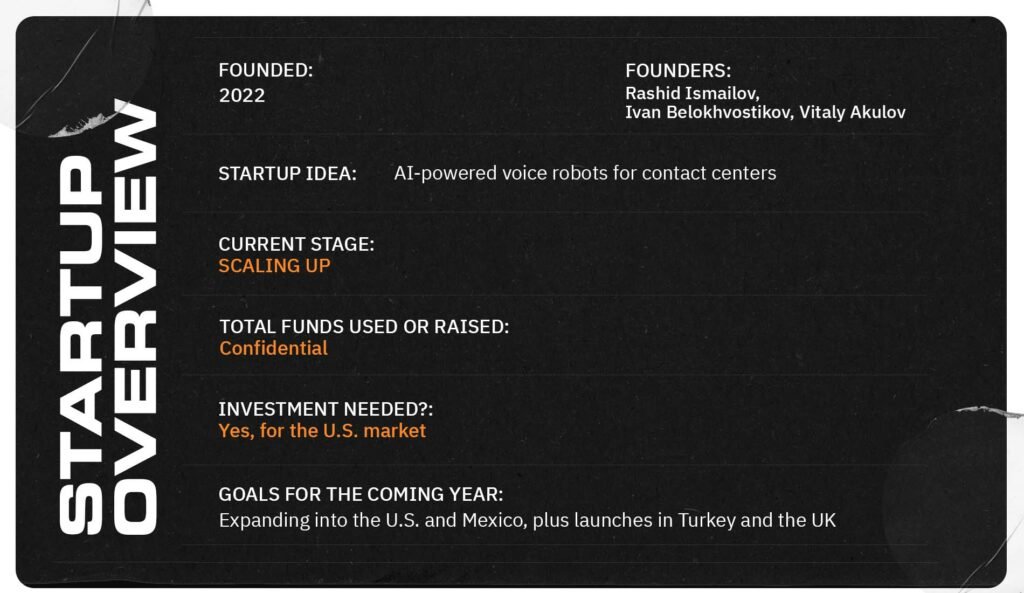
Kazakhstan has taken a decisive step toward technological independence with the development of Central Asia’s largest artificial intelligence model for automatic speech recognition (ASR) in Turkic languages. Unveiled by Cybernet AI, the system represents a major breakthrough in regional AI innovation, addressing long-standing gaps in voice technology for languages that have historically been underserved by global platforms. This achievement signals more than just a technological upgrade—it reflects a broader ambition to build digital sovereignty and reduce reliance on imported AI systems. By designing a model specifically for Turkic linguistic structures, Kazakhstan is positioning itself as a leader in localized AI development across Central Asia and beyond.


Building AI for Turkic Languages from the Ground Up Most widely used speech recognition systems today are built on datasets dominated by English and a handful of major global languages. As a result, their performance often declines significantly when applied to languages with different phonetic systems, grammatical structures, and speech patterns. Cybernet AI’s approach diverges sharply from this model. Instead of adapting an English-centric system, the company developed its ASR model from scratch using native linguistic datasets from Kazakh, Turkish, Uzbek, Kyrgyz, Azerbaijani, and Tatar. This foundational shift enables the system to capture the nuances of Turkic phonetics—such as vowel harmony, agglutinative word structures, and regional accents. A defining feature of the model is its ability to recognize mixed-language speech, particularly combinations of Turkic languages and Russian. In countries like Kazakhstan and Uzbekistan, code-switching between languages is a common part of everyday communication. Traditional ASR systems struggle with such patterns, often misinterpreting words or failing to process sentences accurately. Cybernet AI’s model, however, has been trained specifically to handle these hybrid forms of speech, making it far more effective in real-world scenarios.


Strategic Support and Infrastructure
The development of the ASR model was not an isolated effort. It was supported by Astana Hub and the Ministry of Digital Development Innovation and Aerospace Industry, reflecting strong institutional backing for AI innovation in the country. Crucially, the project leveraged advanced GPU infrastructure provided by Microsoft. High-performance computing is essential for training large-scale AI models, particularly those involving speech recognition, which requires processing vast amounts of audio data. This collaboration highlights how global technological resources can complement local innovation to produce region-specific solutions. According to industry observers, this blend of local expertise and international infrastructure is becoming a defining feature of emerging AI ecosystems. It allows countries like Kazakhstan to accelerate development while maintaining control over the direction and application of their technologies.


From Dependency to Technological Sovereignty
For years, Central Asian countries relied heavily on international ASR platforms. While these systems offered baseline functionality, they often struggled with Turkic phonetics, accents, and code-switching. This limitation had tangible consequences across industries, reducing the effectiveness of voice-based services in sectors such as banking, telecommunications, and public administration. The new model represents a shift from dependency to self-reliance. By embedding linguistic and cultural context directly into the system, Cybernet AI has created a tool that aligns more closely with the realities of regional communication. As noted by Tanat Uskembayev of Astana Hub, the development opens new opportunities for Turkic-speaking countries to scale digital services in their native languages. It also marks a transition for Kazakhstan—from a consumer of global AI solutions to a developer of competitive, export-ready technologies. This shift is particularly significant in the context of global discussions around data sovereignty and digital independence. By controlling both the data and the algorithms, Kazakhstan can ensure that its AI systems are aligned with national priorities, regulatory frameworks, and cultural contexts.

Real-World Applications Across Industries
The practical implications of this ASR model are extensive. It is designed to serve organizations that handle large volumes of voice interactions, including banks, telecom providers, logistics companies, and government agencies. In customer service environments, for example, the model can be integrated into call centers to automate routine inquiries, transcribe conversations, and provide real-time assistance. Its ability to understand mixed-language speech makes it particularly valuable in multilingual regions, where customers often switch between languages within a single interaction. For financial institutions, the technology can enhance fraud detection, improve customer verification processes, and streamline support services. In logistics, it can facilitate voice-based tracking and coordination, while in public administration, it can enable more accessible and efficient service delivery. One of the model’s key strengths is its resilience to challenging conditions. It maintains high accuracy even in the presence of background noise, varied accents, and rapid speech. This robustness makes it suitable for deployment in diverse environments, from busy call centers to field operations.

Strengthening the Regional AI Ecosystem
Cybernet AI’s innovation is not just a standalone product—it is part of a broader effort to build a sustainable AI ecosystem in Kazakhstan and Central Asia. As a resident of Astana Hub, the company operates within a growing network of startups, researchers, and institutions focused on digital transformation. The company’s international footprint further underscores its ambitions. With operations spanning Kazakhstan, Uzbekistan, the Kyrgyz Republic, the United States, Mexico, and Egypt—and projects in the United Kingdom and European Union—Cybernet AI is positioning itself as a global player in enterprise AI solutions. Its platforms currently support 34 languages, including Kazakh, Uzbek, Russian, English, Arabic, and Spanish. This multilingual capability not only enhances its competitiveness but also demonstrates the scalability of its technology.

The Future of Voice AI in Central Asia
The development of a large-scale Turkic ASR model marks a turning point for voice technology in Central Asia. As digital services continue to expand, the demand for accurate, culturally relevant AI solutions will only grow. Looking ahead, the technology could pave the way for more advanced applications, such as real-time translation between Turkic languages, voice-driven virtual assistants tailored to regional contexts, and AI-powered education tools that support language learning and literacy. Moreover, the success of this project may inspire further investment in AI research and development across the region. By demonstrating that locally developed solutions can compete on a global scale, Kazakhstan is setting a precedent for other countries seeking to build their own technological capabilities.

Kazakhstan’s development of Central Asia’s largest ASR model for Turkic languages represents a significant milestone in the region’s digital evolution. By prioritizing linguistic authenticity, technological independence, and practical application, Cybernet AI has created a system that addresses both local needs and global opportunities. More than just a technological achievement, the project embodies a broader vision of innovation—one that values cultural context, regional collaboration, and long-term sustainability. As voice technology becomes an increasingly integral part of everyday life, Kazakhstan’s pioneering efforts are likely to shape the future of AI not only in Central Asia but across the wider Turkic world.



More to Read
All issues
Kazakhstan Accelerates Digital Transformation To Attract Global Investment
Kazakhstan is entering a new phase of economic development, combining investment reforms, artificial intelligence, digital infrastructure and strategic industries to…

The Intelligent Almaty — Where Urban Innovation Meets Kazakhstan’s Digital Future
Almaty is gaining international recognition for the way it is embracing digital technologies to improve urban services and support a more connected city experience. In…

Kazakhstan Advances AI Future with New Supercomputer & Expanding Data Centers
Kazakhstan is accelerating its ambitions to become a regional leader in artificial intelligence (AI) and digital technology by expanding its supercomputing capabilities…